_edited.jpg)
THE CROP INTERNSHIP
Our high school and university outreach programs take place in the summer with hands-on, brain-based and place-based experiential learning. The Collaborative Research Opportunity Program (CROP) trains undergraduates to become Near Peer Mentors for rising junior and senior high school students and their teachers during the Roots, Rivers and Reclamation (3Rs) institute.
The Collaborative Research Opportunity Program (CROP)
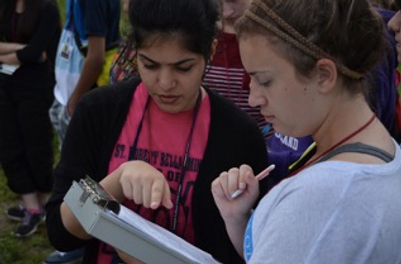
The Collaborative Research Opportunity Program (CROP) offers students and emerging scholars the chance to participate in real research, contribute to community projects, and develop skills in sustainable agriculture, ecology, and interdisciplinary inquiry.
CROP INTERNSHIP OVERVIEW

The Collaborative Research Opportunity Program (CROP) at the Greendale‑Couch Organic Farm Company (GCOFC) is an undergraduate summer research initiative grounded in the principles of Near‑Peer Mentoring (NPM). The program engages students in scientific inquiry, sustainable organic practices, and community‑centered problem‑solving. CROP emphasizes ecological integrity, social justice, democratic participation, and evidence‑based approaches to environmental stewardship.
Modeled after the Learning Streams International Science Research and Teaching Collaborative (est. 2007), CROP brings together faculty, professional mentors, and undergraduate researchers from diverse disciplines. Through this interdisciplinary structure, participants investigate sustainable organic solutions while contributing to public education and community engagement.
NPMs receive daily guidance from faculty and professional mentors as they design and conduct independent summer research projects focused on strengthening human–nature relationships. In turn, NPMs mentor high school students and teachers, creating a collaborative network of learners committed to scientific literacy, environmental responsibility, and community improvement.
Over the seven‑week program, NPMs participate in a combination of in‑person and virtual training sessions that develop scientific, technological, and pedagogical competencies. They learn from mentors within their assigned research area while also engaging with peers across disciplines, modeling the collaborative support they receive from the program’s faculty and professional mentors.

INTERNSHIP RESEARCH AREAS
Sustainable Farming, and Marketing; Farmers Markets and Community Outreach
Interns: 1 : Sustainable Products, Farmers Markets
Primary Mentors: Dan Bancroft; Sara Hill
This research area examines the ecological and economic dimensions of sustainable agriculture, with a particular focus on heirloom fruit production, community‑based food systems, and value‑added organic products. Interns explore how diversified orchards, local markets, and sustainable technologies contribute to resilient regional food economies. Students gain experience in ecological assessment, market analysis, and community engagement while contributing to the development of sustainable, locally rooted agricultural models.
Heirloom Fruit, Nut, and Berry Orchards
Interns: 1
Primary Mentor: Lucy Chamberlain
This internship centers on the study and stewardship of heirloom tree crops and orchard systems, with potential expansion into nut‑bearing species. Interns investigate varietal characteristics, orchard ecology, and sustainable cultivation practices. The work supports long‑term preservation of genetic diversity while advancing organic orchard management strategies that strengthen local food systems.
Interns: 1
Primary Mentors: Dan Bancroft; Sara Hill
Farmers markets serve as essential community hubs that strengthen local economies, expand food access, and support small and mid‑sized farms. Interns in this area examine the economic, social, and public‑health impacts of farmers markets, including SNAP/EBT programs, produce incentives, and nutrition education initiatives. Through hands‑on engagement with vendors, community partners, and outreach programs, interns develop skills in nonprofit operations, public education, and community‑based economic development.
Technology, Artificial Intelligence, and Small Organic Farms
Interns: 1
Primary Mentor:
This research area investigates emerging applications of artificial intelligence and remote‑sensing technologies in small‑scale organic agriculture. Interns explore tools such as satellite imagery, drones, lidar, and historical mapping methods to assess how data‑driven approaches can enhance sustainability, efficiency, and ecological monitoring. The work emphasizes both the opportunities and challenges of integrating advanced technologies into community‑based organic farming systems.
Field Botany and Entomology
Interns: 1
Primary Mentors: Michael Cunningham‑Minnick; Jessie Lanterman Novotny
Biological communities are shaped by complex interactions among plants, invertebrates, and other organisms. Interns in this area conduct independent ecological research focused on plant–invertebrate relationships that influence sustainable agriculture and natural ecosystems. Working at both the Greendale‑Couch Organic Farm and the James H. Barrow Biological Field Station of Hiram College, interns learn species identification, ecological sampling, data analysis, and scientific communication. They join a broader community of undergraduate researchers while contributing to long‑term ecological understanding and conservation.
Historic Preservation, Sustainable Building, and Communication
Interns: 1
Primary Mentors: Chad Kendzerski; Mary Buchenic;
This internship integrates historic preservation, sustainable construction, and community‑centered design. Interns study post‑and‑beam building techniques, commercial‑grade kitchen design, and natural outdoor cooking systems, including solar cooking. A central component of the internship involves contributing to the reconstruction of the historic Anderson Barn and engaging participants in the Summer Institute through hands‑on learning and public communication.
Pre‑European Peoples and Land Practices
Interns: 1
Primary Mentor: Merose Hwang
This research area explores Indigenous land‑use histories, ecological knowledge systems, and cultural relationships with the environment. Interns examine pre‑Columbian land practices to better understand sustainable stewardship traditions that inform contemporary ecological restoration and community education.
Land Histories and Use
Interns: 1
Primary Mentor: Christie Borkan
This internship investigates the historical development of the Greendale‑Couch Organic Farm property, including its buildings, land use, and ownership records. Interns analyze tax maps, deed transfers, courthouse archives, and historical documents from the 19th and 20th centuries. Additional work includes architectural analysis of the timber‑frame farmhouse, photographic documentation, and development of archival systems. The goal is to create a multidimensional understanding of the property’s historical fabric to inform future programming and stewardship.
Oral Histories
Interns: 1
Primary Mentor: To be assigned
The recent history of the Greendale‑Couch Farm is preserved in the memories of community members, workers, and families connected to the land. Interns in this area develop skills in oral‑history methodology, including interviewing, audio recording, transcription, and narrative documentation. The work captures stories about the farm’s people, agricultural practices, cultural landscapes, and ecological changes across the 20th and 21st centuries.
Communication and Social Media
Interns: 1
Primary Mentor: Chris Carman
This internship focuses on digital communication, public engagement, and the development of online educational resources. Interns support the creation and maintenance of the farm’s website, social media platforms, and outreach materials. The work emphasizes clear communication of scientific research, community programming, and the mission of the Greendale‑Couch Organic Farm Company.
Microplastics in the orchard: Organic agriculture and sustainable solutions
Interns: 1
In modern agricultural practices, commonly used plastics break down into microplastics, which fall into the orchard soil. Organic farming practices offer an alternative, whilst still requiring some plastics in weed mulches. Working at both FCOF and the Organic Chemistry lab at Hiram College, interns learn sampling and extraction techniques, chemical and data analysis. The project centers on analyzing apple samples from the orchard to test for microplastics and comparing them with samples grown via conventional methods.
TEACHING, LEARNING AND MENTORING

The CROP program is built on a strong foundation of democratic learning, environmental justice, and inquiry based science education. Near Peer Mentors (NPMs) receive daily guidance from Teaching and Learning Leaders and weekly support from Professional and Faculty Mentors.NPMs develop expertise in:
-
Their research area
-
Democratic decision making
-
Collaborative leadership
-
Scientific communication
-
Mentoring high school students and teachers
The program emphasizes reciprocal learning—students, teachers, and mentors all contribute to a shared understanding of how scientific discovery can strengthen communities.

INTERNSHIP REQUIREMENTS and COMPENSATION
Eligibility Requirements
Successful applicants will:
-
Be at least 19 years and six months old by July 1, 2026;
-
Have completed two full years of a four-year degree OR two years of community college;
-
Have an interest in one to three of the CROP research areas;
-
Be studying for or recently graduated from a 2 or 4 year program;
-
Must commit to the entire 9-week internship and be present for all training.
Compensation
-
$5,700 paid in three monthly installments
-
Room and Board from June 8 through August 4th.
How to Apply:
1. Review the CROP research areas and identify the internship that aligns with your academic interests.
2. Prepare your application.
3. Submit your materials in an email to:
Dennis J. Taylor, Professor Emeritus, Secretary, GCOFC
Email: dennis.taylor@gmail.com Phone: (330) 780 7973
We welcome inquiries from students, educators, and community partners committed to sustainable agriculture, environmental stewardship, and democratic learning.
The Roots, Rivers, and Reclamation (3R’s) Institute Program description Rethink • Relearn • Rebuild Democratic Learning for Sustainable Communities The 3R’s Institute is GCOF’s educational program for learning the tools of democratic learning, community engagement, and lifelong education. Through short workshops, hands-on learning experiences, mentoring, and public programs, the Institute helps individuals and communities rethink their relationship to the land, relearn sustainable practices, and rebuild systems that support ecological and social well‑being. The Institute includes:
Teacher workshops and professional development
Community classes on the research areas of the interns including orchard care
Public talks and demonstrations
Near‑peer mentoring for students
Democratic learning seminars
Youth leadership development
Hands‑on field days and collaborative projects
The Institute is grounded: We model brain‑based, place‑based, hands-on learning, integrating neuroscience, local context, and experiential education. What Our Program for the 3Rs stresses:Strengthening community resilience
Supporting ecological integrity
Promoting democratic participation
Providing hands‑on, research‑based learning
Connecting people to sustainable, organic solutions
Building a culture of stewardship, innovation, and shared responsibility
What students, the next generation of leaders, educators, and community partners experience:Technology – introduction of interdisciplinary uses of technology to improve your ability to understand the natural world, find solutions to improve what your community finds, and communicate to others what is important.
Learning – group learning strategies for learning communities, ideas to improve brain-based learning, experimental design planning, critical thinking, journal and field book entries, writing in different genres and program reflections.
Citizen Science – service learning, collaboration and cooperation, democratic decision making, compromise, delegation of tasks, completion of group efforts, communicating to different audiences, multidisciplinary approaches to environmental problems; ecosystem services, how we affect them and ways to test, including the OAPA protocols.
Careers, Jobs and Colleges – round-robin interaction with multidisciplinary teams of experts with local, regional, national and international experience; crafting your experiences for specific resumes and applications; writing for college essays and networking.
Making Learning Fun – why experiential learning lasts, integrating learning and social activities including what you eat (and throw away) as a way to improve sustainability.
The Greendale Couch Organic Farm is based on what we have learned from thirteen summers of the Learning Streams International program model, where students reported that their best learning experiences were also the most fun.
THE ROOTS, RIVERS, and RECLAMATION INSTITUTE SCHEDULE (subject to change and weather dependent) Teachers need to be present from 8:30am. To 4:00 p.m but are welcome to spend the night if we know what days a room is needed. Teachers are also welcome to stay after supper through evening activities. Students must be present for the entire institute and may not leave campus. Day 1 July 26 - Determining our purposeCheck in 11:00 a.m. to noon
Afternoon
Exercises in mentoring, self-perception, skills for working in communities and promoting effective change, practice in public speaking
Understanding our relationship to the earth and assessment by school learning communities (LC)
Evening
Creation of crests and mottos
Assessment of learning and preparation
Morning
Review of Day 1 & Community building
Exploring 1 new avenue of learning to help us understand our relationship to the land (each student in a school learning community can explore a different research area).
Afternoon
Exploration of a “pre-Columbian” forest – Barrow Field Station
Deeply held beliefs and why data may not change them
Exploration of organic farm habitats
FUN activities
Evening
Project brainstorming
Assessment of learning and alignment of assessments with careers and interests
Morning
Exploring a 2nd avenue of learning about the land from a different perspective (each student explores a 2nd area with the goal of learning about all 10 areas of research for the learning community.
LC identification of community issues that might be addressed
Diversity, equity and justice and the land
LC identification of participant strengths
LC assessment of knowledge gaps
Afternoon
Exploring from your peers what they have learned
Assessment of learning and FUN ACTIVITIES
Evening
Movie Night
Assessment of learning and more fun
Morning
Innovating ways to communicate what you have learned to others
Round robin with experts in different ways of knowing the land
Afternoon
Exploring with your peers what else we need to know
Assessment of learning and preparation for evening
Evening
Innovating projects and Fun activities
Morning and Afternoon TBD
Evening
Sustainable dinner, Post dinner Cultural Evening
Morning
Preparation and Practice for presentations
11 a.m. Presentations for Families
Lunch
1 p.m. depart